Why I Have Learned to Love My Boundaries
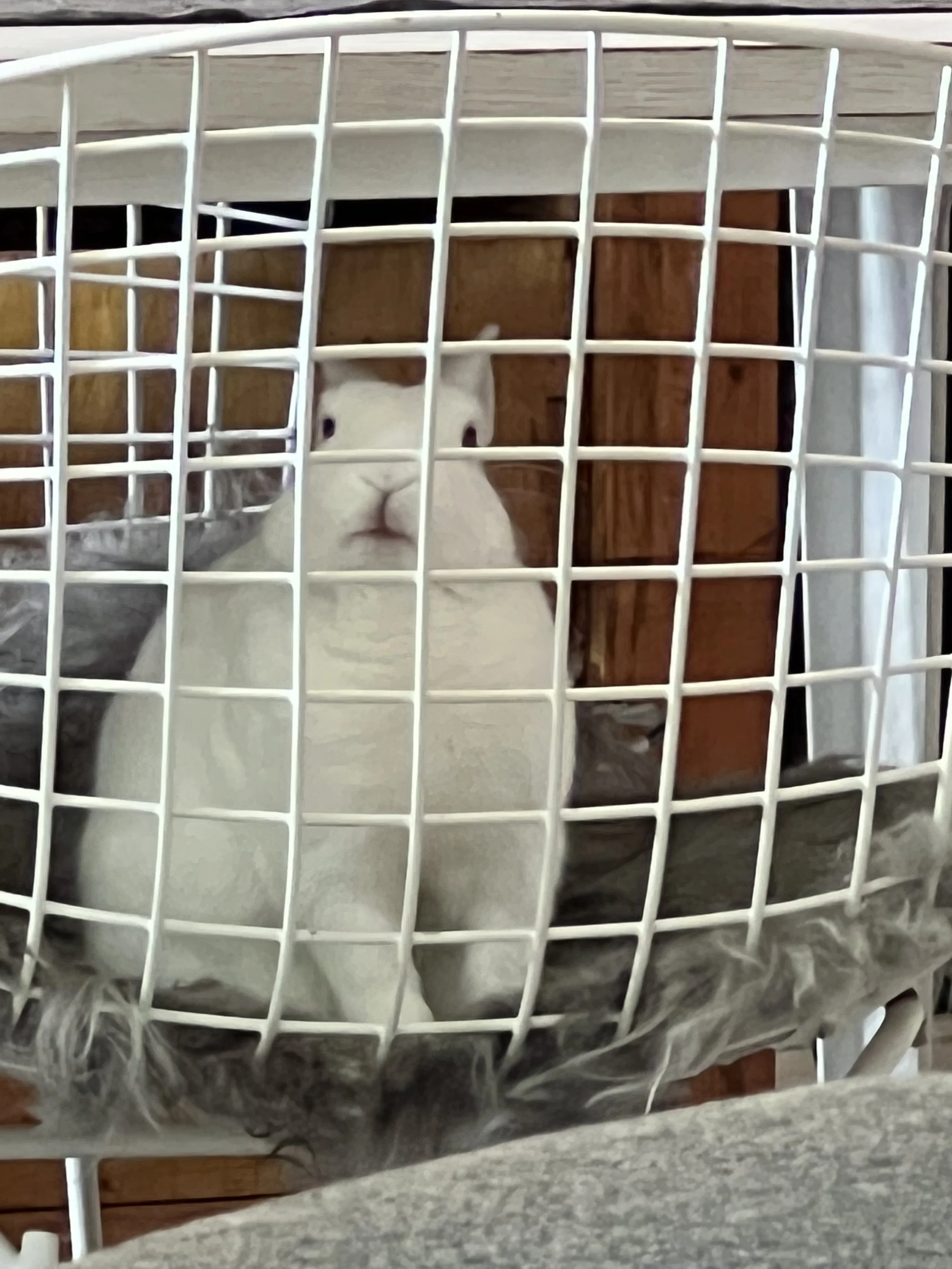
Sweetie knows how to set boundaries. No touchy!
I didn’t always like boundaries, but that was because I was focused on people pleasing and perfectionism, rather than my own needs. I used to say yes to everything. Every favor, every commitment, every social obligation that felt vaguely uncomfortable to decline. And I told myself this was being a good friend/daughter/partner. What I didn’t see was that this compulsive yes-saying was less about generosity and more about fear. My fear of disappointing people, fear of being seen as difficult, and fear of being left out.
What a Boundary Actually Is
That which serves to indicate the bounds or limits of anything whether material or immaterial; also the limit itself. (First used in 1626.)
Oxford English Dictionary
A boundary is not a wall or a barrier. It is not a retaliation, a rejection, or a sign that something is wrong. A boundary is a declaration of what you need in order to show up — for yourself, for others, for the life you’re building. It takes a great deal of self-knowledge and courage to set boundaries.
It took me quite a few years to learn not only why setting boundaries was so important for my mental health, but also how to set them. Setting clear demarcations helped me do away with the anger and resentment I felt when I said yes to something I didn’t want to do. It helped me show up authentically as myself, pour my energy into community and the things that fill my cup. Most importantly it meant I was communicating more effectively with the people in my life.
I strongly feel that when I say no to the things that don’t align with me, my energy level and values, then I am saying yes to the things, and people, that I truly love and that light me up.
A boundary I have been struggling with recently is around what I am physically able to do. I was in a car accident many years ago and I shattered my left tibia and fibula. It’s held together now with two titanium plates and ten screws. Over the years the arthritis in that leg has become, well, really bad, and my daily pain level is about a six. I have certain things that cause too much pain and I can’t do but I’m not good at telling people that. So I do them, and then I can’t walk the next day. Or, if I do say I can’t do that because it hurts, I overshare and then I feel guilt and shame.
And then I remembered boundaries. I have to set some boundaries around what I physically cannot do and communicate what they are without the need to over explain. Realizing this felt freeing. It means I can say no to doing the things that make it so I can’t walk the next day without the guilt and shame.
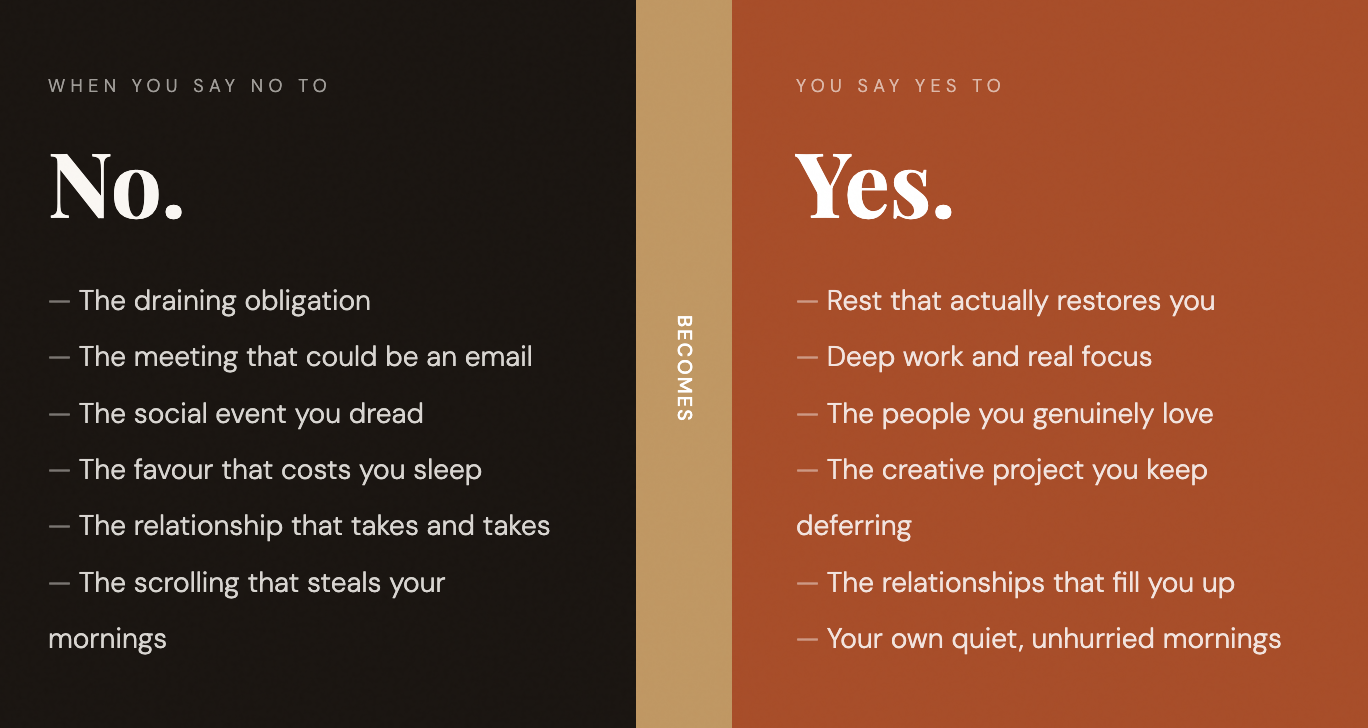
All of that to say this work isn’t easy. It’s on going and challenging. But at the end of the day boundaries have taught me what I actually value. You learn surprisingly little about yourself when you say yes to everything. But say no to something — really sit with the discomfort of it — and you discover exactly what you were protecting.
I also love them because my yeses mean something. When I say yes now, it is not out of guilt or habit or fear of missing out. It is a deliberate, intentional, and wholehearted agreement. Those yeses are the ones that help me build and nurture my relationships and my creative life.
Build a fence. With love,
Kandy
Life Coaching
If you want to find out more about what how Life Coaching can help, please sign up for a free half hour Curiosity Call. You can ask all the questions you have to learn about how Life Coaching can help you.
Etymology
If you are as interested as I am in the etymology of words, here’s the history of the word boundary from the Oxford English Dictionary
1626 Corruption is a Reciprocall to Generation: And they Two, are as Natures two Termes or Bundaries.
F. Bacon, Sylua Syluarum §328
1690 The simple Ideas, we receive from Sensation and Reflection, are the Boundaries of our Thoughts.
J. Locke, Essay Humane Understanding ii. xxiii. 146
1751. Providence has fixed the limits of human enjoyment by immoveable boundaries.
S. Johnson, Rambler No. 178. ⁋3
1860. The dots representing the boundaries of the ridges.
J. Tyndall, The Glaciers of the Alps i. §6. 43